A prodigal life. A prodigal nation. Each finding its way home.
Prodigal Nation is a work of literary fiction that blends dystopian suspense, political thriller, and family saga. Set in 2034, it follows an ordinary man whose life story becomes inseparable from his country’s fracture — and its chance at rebirth. Drawing on decades of deepening polarization and rising calls to tear it all down, the novel imagines where that road might lead, and asks what holds a family, and a nation, together when everything else comes apart.


Book Synopsis
In a near-future America fractured by ideology and civil war, Elias Greenlee is awakened by a holographic warrant summoning him to a community wellness center. Rather than face internment, Elias and his wife flee into the darkness, toward the free Commonwealth of American States and his son's small farm in Tennessee. But the Unity regime is not finished with him. Across a divided continent, the regime masses its forces.As invasion approaches, Elias reconnects with his eighteen-year-old grandson Theo. Through the autumn and into winter, Theo fills a leather-bound notebook with his grandfather's life — a boy running wild at the edge of the California desert, a father who fed the grocery money to smoke-choked poker dives, a Safeway dumpster where a twelve-year-old learned to feed himself, and an improbable encounter in a Mexico City bookstore with Brenda, an investigative journalist on the run from the cartels. As Theo writes, he starts to see the shape of his grandfather's prodigal life, and alongside it, a prodigal nation — each wandering far from what it was made to be, each finding its
way home.When the war breaks, what follows will test everything Elias's family has built, everything Theo has prepared for, and everything the Commonwealth dared to become.

Excerpt, Novel Opening, 2034
When I think back to that night, what I remember most is the holographic warrant above our nightstand at 2:03 a.m. It pulsed in the pattern of an SOS — three short, three long, three short. Either coincidence or the dark humor of the programmer who wrote it. The pale blue light flared and faded across Brenda's sleeping face while I worked the sequence instead of registering the threat. Sixty-eight years of compulsively sorting the world into patterns — the timing of the refrigerator's compressor cycles, the hour my neighbor's blinds closed each night, the small inconsistencies that crept into people's stories when they told them again days later. The summons ordered me to report to the Community Wellness Center. No one knew exactly what happened inside those places. You walked in as yourself, met by counselors with reassuring faces and voices like warm honey. Weeks later, a pleasant stranger emerged wearing your skin — smiling, a faint tremor in the hands, endlessly grateful for the breakthrough.

Excerpt, President Shahid's Broadcast
President Amir Shahid materialized. The youngest president in American history, sworn in at forty. Mid-forties now, the kind of face that photographed as trustworthy — dark eyes, a carefully trimmed beard, the hint of gray at his temples lending gravity he hadn't earned. The media had mistaken his polish and performance of virtue for substance. I'd seen the calculation beneath it."Friends, dear neighbors, members of our shared unity," he began, his voice steeped in rehearsed compassion, pastoral in register, like a shepherd calling back lost sheep."For too long our nation has been fractured. The so-called Commonwealth — those misguided states that turned their backs on our common future — has brought untold pain. Families separated. Communities torn apart. Resources siphoned off and hoarded, kept from our communal prosperity."Yet our hearts remain open. Our compassion endures, no matter how tested. So, in the spirit of healing, we extend this invitation — not only to those who fled, but to the wayward territories themselves. We call on our estranged brothers and sisters to return to the warmth of the collective — to the Unity States of America — by December 31, 2034. Reunification. Reconciliation. A single nation, made whole again."To those who left: your families miss you. Your children's classmates ask where they went. Your grandmothers light candles in empty rooms. Come home, and you will be embraced — no questions, no judgment — by the people who have always loved you."To the good people of the Commonwealth: we know many of you never asked for this. You want peace, the chance to see loved ones again. Press your leaders. Demand reconciliation. We are offering you a path back to wholeness — take it."To the Commonwealth government: do right by your people. Spare them the suffering that ongoing division brings. History does not look kindly on those who spurn a hand offered in peace.""Once our generous reconciliation date expires," he continued, his warmth draining a few degrees, "we must assume those who refuse our kindness have made their choice — and choices have consequences: for governments, communities, individuals. We do not wish to speak of what comes next, and we pray it won't be necessary. But if our generosity is rejected..." He let the silence stretch, eyes soft with practiced sorrow. "We will do what must be done."

Excerpt, The Descent
"That year — 2020 — was my descent. Mom, my north star, extinguished. My career, that tether to routine and other human beings, severed. The Central Coast I'd loved — foggy mornings and endless aquamarine promise — receding like a tide never to return. My marriage, vows whispered into wind. Those dreams of Sofia and me touring the world — scattered like ashes back at the Mexican resort. Meanwhile, California waited for my return, sky ablaze, bleeding orange through smoke-choked air, humanity retreating behind masks and social distancing." I turned from the railing. "Almost forty years since those swing-set nights at McKinley Park — and more alone than ever."I'd arrived in hell, certain I deserved every frozen inch of it. Long removed from those days guided by God's light, I'd become a wretched soul. Like Dante, I'd passed through the gates where Abandon all hope is etched in stone, descending circle by circle, past the wrathful thrashing in the Styx, past the heretics in their flaming tombs — each day sinking deeper. Below me waited Cocytus, the frozen lake, where souls stood locked in ice, so distant from God's warmth that their faces had frozen in silent screams, the cold so absolute it burned. And at the center of it, the beat of Lucifer's great wings — the wind that kept the lake frozen. I wasn't in his grasp yet. But I was on my way."

Excerpt, Major Graves, Unity States Army Intelligence, Congressional Hearing
Graves was quiet for a moment — composing his response with the patience of a professor addressing students who hadn't done the reading."The failure of a single battle doesn't disprove the righteousness of the war, Senator. The vision remains intact — a society ordered around collective welfare rather than private accumulation, with resources allocated to correct the inherited inequities of history, in which we rise or fall as one human family. That remains the higher moral path. What you've built is a cult of material well-being — people gorging themselves on everyday consumption while remaining inwardly empty. Unrestrained self-interest has never been a moral philosophy. It has only ever been an appetite."Harper looked at her colleagues, then back at Graves. "Major Graves, your beautiful theory has an ugly family album. The Soviet gulags. The Chinese Cultural Revolution. The killing fields of Cambodia. Cuban exiles clinging to rafts. Unity's neural stimulators. Different decades, different continents, same story — surrender your freedom for the collective good, then watch the promises evaporate and the prisons fill with anyone who notices."She set her glasses on the table."It fails, Major Graves, not because of bad implementation. It fails because it requires something that doesn't exist — human beings willing to surrender their dreams, their judgment, their conscience to a collective authority. The moment you have to force that surrender — with Unity Scores and neural stimulators — you've proven the vision cannot survive contact with actual human beings."For a moment, he almost pulled me in again. The conviction in his voice. The reasonable tone that made atrocity sound like arithmetic. The language of compassion. On the surface, it sounded noble. Unassailable. And for a few seconds, the ground beneath me seemed to shift.Then the clarity returned. The gun against Brenda's temple. The twenty-second countdown. Strip away the Princeton diction, the calibrated courtesy, the genuine belief in his own virtue — and it came down to that. A man with a gun to a woman's head. The ground steadied beneath me.And yet the hatred I expected never came. What arrived in its place was more unsettling. I could picture us at a corner table in some quiet café, two cups of coffee cooling between us, debating Solzhenitsyn or Dostoevsky. He was curious, well read, unfailingly courteous. I imagined him quoting from memory, his voice precise, his eyes alight with the pleasure of the argument. The most interesting mind I'd met in a long time. And he had used it to take me apart. I couldn't bring myself to hate him. But I hated the part of myself that wished, under different circumstances, we might have been good friends.
Excerpt, Emma Petrova, Tomorrow's Guardians
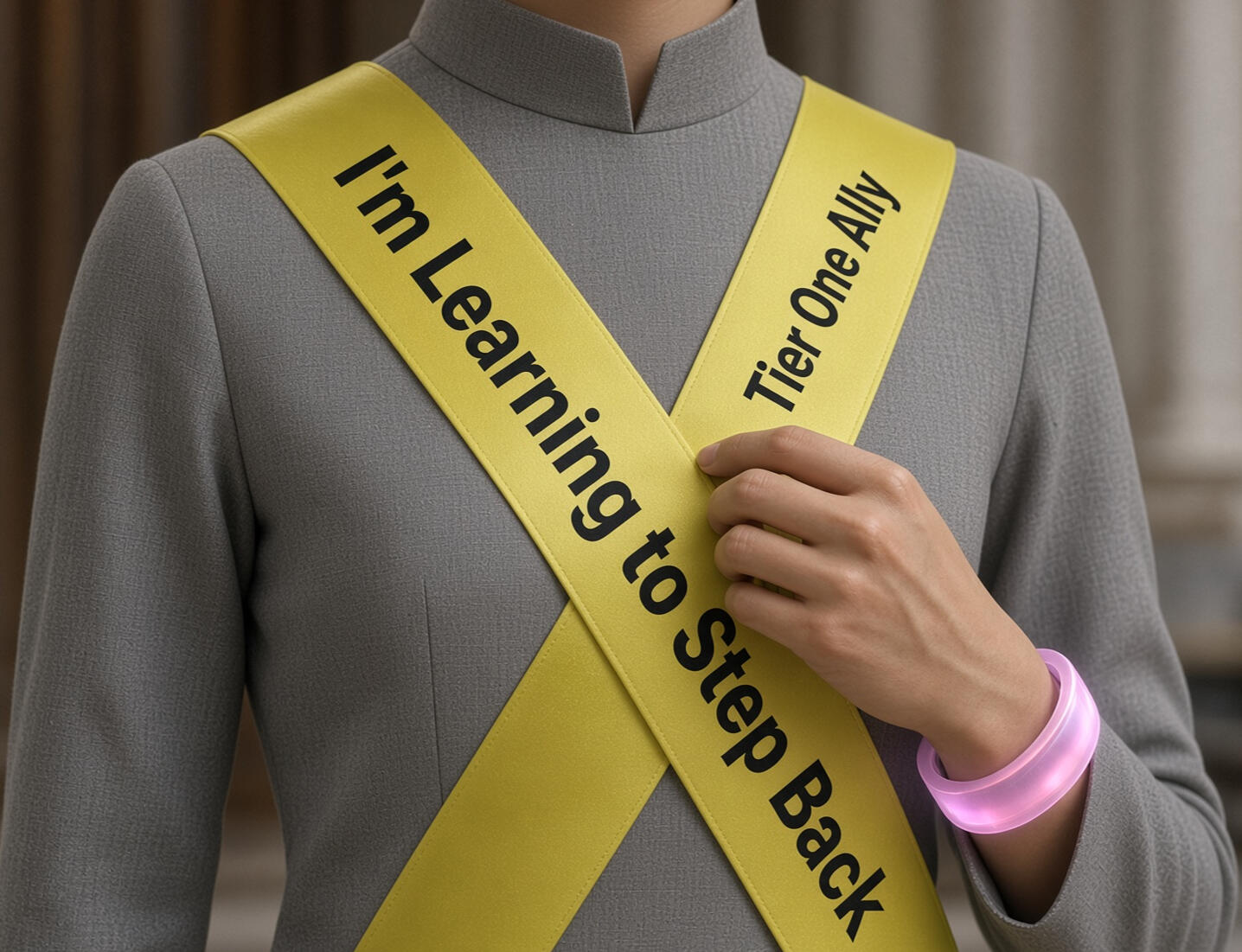
"Ms. Petrova," Harper began, "the committee understands you achieved Tier One Unity Score by age eighteen — a significant accomplishment. Can you tell us about Tomorrow's Guardians — its purpose, its philosophy, and what daily life looked like?""Tomorrow's Guardians was our youth program," Emma began. "Ages twelve to twenty-four. We gathered in local collectives — thirty to fifty members — for weekly sessions centered on education, service, and mutual support. We were being prepared to lead our communities toward a new future. We would be the ones who lived the principles first, who showed others what collective life could look like when it was done with conviction and caring."Her voice took on the cadence of recitation. "We learned that the means of production — the factories, the farms — belong to everyone. Each person contributes according to ability and receives according to need. Seeking personal gain or standing out from others damages community wellness." Her fingers went to her sashes and straightened them. "Our instructors encouraged us to think in terms of 'we' and 'us' rather than 'I' and 'me,' because our thoughts and actions weren't just ours — they belonged to the community."Representative Washington leaned forward. "What did these principles look like in daily life?""We distributed nutrition packets at community centers, winterized homes for the elderly, and sat with families whose Unity Scores had dropped too low, helping them navigate corrective protocols. We practiced mutual feedback sessions — what the Commonwealth calls 'atonements' — where members identified behaviors that seemed too individualistic, helping each other become better examples for the community."Harper made notes. "You mentioned Unity Score. How did that system work?""Points awarded for community service, allyship, participation in Party events. Points deducted for individualistic behavior — hoarding, personal ambition, prioritizing your own family, exceeding your carbon equity allocation. Higher scores meant access to education, preferred work assignments, Party membership."Representative Chen asked quietly, "Did you believe in these principles?""Yes," she said, hands folded in her lap. "Our instructors would project images of Commonwealth billionaires beside homeless encampments and ask, 'Is this justice?' They explained that individual achievement creates inequality. The Commonwealth celebrates the climber who reaches the summit, while others fall behind — or worse. Unity teaches that we ascend together, even if it means waiting for others to catch up."Senator Torres asked, "And now? Having lived in the Commonwealth for a month?"Emma took a moment."Everyone here has been kind. The refugee centers provide food, medical care, help finding work — without even checking scores. We're grateful."She drew a breath."Adjusting has been hard. It feels lonely for some of us. Everyone here is into their own thing." She paused. "We overhear young people say things like, 'I want to start my own business — something tech.' Or 'I want to travel to Fiji to get my scuba certification.' Or 'I just got promoted to shift lead.' To us, it sounds hollow — like bragging, without shame. And the pictures — the self-promotion — everywhere. Selfies with new tattoos, beach trips captioned 'Living my best life,' a new boyfriend with his arm around her — 'He's mine and I'm his, finally found my person.'" She offered a small, apologetic smile. "Everything is 'I' or 'me.' We're trying not to see it as selfish. But some days it still sounds like a foreign language."Emma's gaze dropped, then lifted.
"Some of us might learn to live this way. Others..." Her voice trailed off. "In Unity, everyone belonged to everyone. The burden was shared. Here... we're separate. On our own. Everything feels heavier. Lonelier."
About the Author
Zeno Lewis spent thirty years inside the machinery of California government, working in finance and administration, where money, politics, and bureaucracy grind out public policy.Childhood trips south across the border left something in him that kept calling him back. He answered in 2020, when personal losses coincided with retirement, moving to Mexico City and beginning a personal renaissance shaped by literature, faith, and solitude. It was there he met his wife. They now divide their time between her family in the Mexican countryside and his in the United States.He came to fiction through the writers who mapped this territory before him. From Orwell and Huxley, the machinery of control. From Kafka, the slow grinding of the human spirit under bureaucratic absurdity. From Solzhenitsyn, how an ideology clothed in compassion and equality can justify atrocity while convincing its authors they are doing good. From Locke, Mill, and Tocqueville, the philosophical foundations of liberty — and how fragile those foundations prove against the passions of the crowd. From Marcus Aurelius, Aristotle, and C. S. Lewis, a language for the work of becoming a person worth being. And from the ancient historians, a lasting enchantment with men whose moral clarity has largely vanished from the modern imagination.Contact: [email protected]